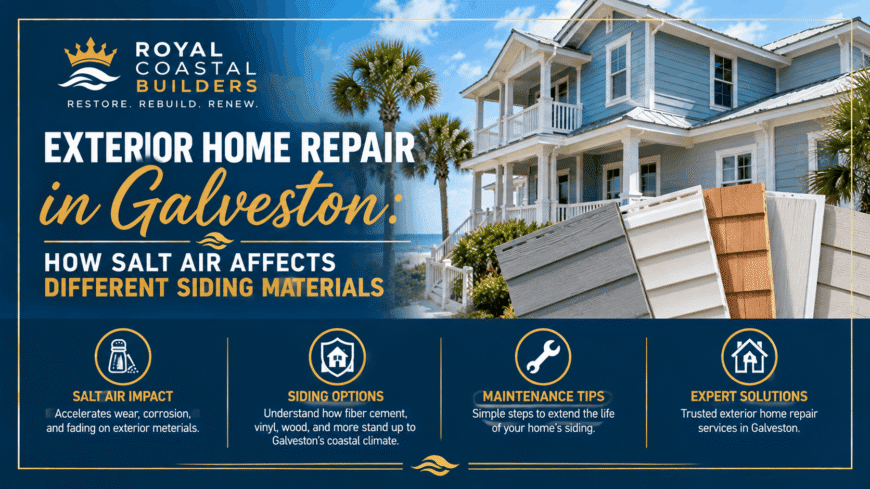
Exterior home repair in Galveston looks different from repair work anywhere else in Texas, and siding is where the difference shows up first. Salt carried on Gulf breezes settles on every exterior surface, humidity keeps those surfaces damp for much of the year, and storm-driven rain pushes moisture into every gap it can find. A siding material that lasts decades inland can start failing within a few years on the island.
This guide compares how common siding materials respond to salt air, what repairs each one typically needs, and how to decide between repairing and replacing. Making the right call early can save a Galveston homeowner a lot of money and rework.
Why Salt Air Changes the Rules for Exterior Home Repair in Galveston
Salt air does damage in several ways at once, which is why coastal siding problems tend to compound.
- Salt attracts moisture. Deposits on siding absorb humidity, so surfaces stay damp longer after rain or morning fog.
- Chlorides attack metal. Nails, screws, flashing, and metal siding corrode faster near salt water.
- Humidity feeds organic growth. Mold, mildew, and rot thrive on damp, shaded wall surfaces.
- Sun and heat open joints. Constant expansion and contraction cracks caulk and loosens trim connections.
- Wind-driven rain finds gaps. During storms, water is forced behind cladding where it cannot easily dry.
Any siding repair plan on Galveston Island needs to address all five, not just the visible surface.
How Common Siding Materials Handle Salt Air
Fiber Cement
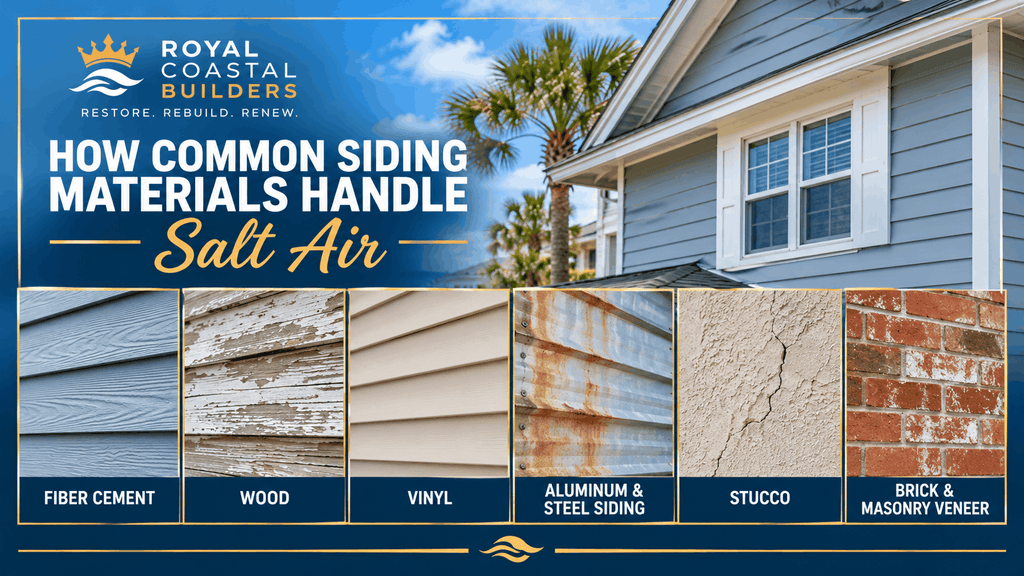
Fiber cement is the most common choice for new coastal construction because it resists rot, insects, and fire, and it holds paint well. Salt air does not corrode it. Its weak points are cut edges and joints. Edges that were not sealed during installation can wick moisture, and failed caulk at seams and trim lets water behind the boards. Most fiber cement repairs involve resealing, recaulking, repainting, and replacing individual damaged boards.
Wood
Wood siding offers a classic look but demands the most upkeep on the coast. Salt and humidity accelerate paint failure, and once the coating breaks down, moisture reaches the wood and rot follows. Cedar and redwood perform better than pine, but all wood siding needs regular repainting and prompt repair of soft or cracked boards. Historic homes often keep wood for preservation reasons, as covered in our historic home restoration guide.
Vinyl
Vinyl does not rust or rot, so salt air itself is not its main enemy. The problems are sun and wind. Long UV exposure can make vinyl brittle and faded, and strong winds can pull panels loose or crack them. Repairs usually mean replacing individual panels and re-securing loose runs. Because vinyl hides moisture behind it, check the wall sheathing whenever panels come off.
Aluminum and Steel Siding
Metal siding sheds water well, but salt is hard on it. Aluminum develops pitting and chalky oxidation, while steel rusts quickly wherever the coating is scratched or chipped. Touch-up and recoating can extend its life, but widespread corrosion usually means replacement.
Stucco
Stucco is popular in coastal architecture, yet hairline cracks let salty moisture reach the lath and wall system behind it. Rusting lath, staining, and bulging are warning signs. Small cracks can be sealed early, but damaged areas often need to be opened up so the moisture source and any hidden rot can be fixed.
Brick and Masonry Veneer
Brick is durable, but salt-laden moisture breaks down mortar joints over time and leaves white salt deposits called efflorescence on the surface. Repointing worn mortar and keeping weep holes clear are the usual repairs. Metal lintels and ties behind the veneer should also be checked for corrosion.
Fasteners, Flashing, and Sealants: The Hidden Repair Points
Many siding failures on Galveston Island start with small parts rather than the siding itself. When repairing or replacing cladding, pay attention to these details:
- Fasteners: Stainless steel or hot-dipped galvanized fasteners resist salt corrosion far better than standard nails and screws.
- Flashing: Windows, doors, rooflines, and wall transitions need properly lapped flashing. Corroded or missing flashing is a common leak source.
- Sealants: Use exterior sealants rated for high UV and humidity, and plan to inspect them regularly. Caulk is a maintenance item, not a permanent fix.
- Water barrier: A continuous weather-resistant barrier behind the siding gives wind-driven water a second line of defense.
Skipping these details is how a new siding job ends up leaking within a few seasons. For more on how salt air attacks other home components, see our guide to saltwater intrusion and plumbing.
Repair or Replace? How to Decide
Not every damaged wall needs new siding. A reasonable rule of thumb:
Repair when damage is limited to a few boards or panels, the wall sheathing behind them is dry and solid, and the problem is mainly worn caulk, paint, or loose trim.
Replace when damage is widespread, moisture has reached the sheathing or framing, corrosion has spread through metal components, or repeated patching is costing more than a new installation would.
Moisture is the deciding factor. If you find soft spots, swollen boards, or musty smells, the issue likely extends behind the surface. After flooding or a major storm, our water damage restoration guide and post-storm restoration guide explain what to inspect and document first. Hidden moisture can also lead to mold, which is why mold prevention matters for exterior walls too.
The USDA Forest Products Laboratory offers research on wood durability and moisture, and the Insurance Institute for Business and Home Safety publishes guidance on building envelope performance in severe weather.
Choosing the Right Approach for Your Home
The best siding for a Galveston home depends on budget, style, and how much maintenance you are willing to do. Fiber cement offers the best balance of durability and low upkeep for most homeowners. Wood and stucco can work well with diligent maintenance. Vinyl and metal fit specific situations. Whatever the material, quality installation details matter as much as the product itself. Our earlier guide on hurricane-rated windows and exterior paint longevity covers the paint and window side of protecting your exterior.
Reliable exterior home repair in Galveston means diagnosing the cause, not just covering the symptom. If your siding is showing cracks, peeling, soft spots, or rust, an early inspection can keep a small repair from turning into a major one.
Ready to have your siding and exterior checked? Contact Royal Coastal Builders at (409) 996-2273 or visit royalcoastalbuilders.com/contact to schedule an assessment.