When a storm is heading for the Texas coast, nobody wants to discover a weak spot in their roof. Knowing how to prepare, and who to call for emergency roof repair in Galveston when something goes wrong, can be the difference between a minor repair and a major loss. The best time to get ready is well before a storm has a name.
This guide gives Galveston homeowners a practical roof checklist, explains what counts as a roofing emergency, and outlines what to do in the hours after damage occurs.
Why Roof Preparation Matters on Galveston Island
The Atlantic hurricane season runs from June 1 through November 30, and Galveston Island sits directly in the path of Gulf storms. Your roof is the first line of defense against wind and rain. Once water gets under the roof covering, it can soak insulation, stain ceilings, and open the door to mold within days.
Small issues that seem harmless in calm weather, such as a lifted shingle or a cracked sealant joint, are exactly where high winds begin to peel a roof apart. Preparation is about finding those weak points while they are still cheap and easy to fix.
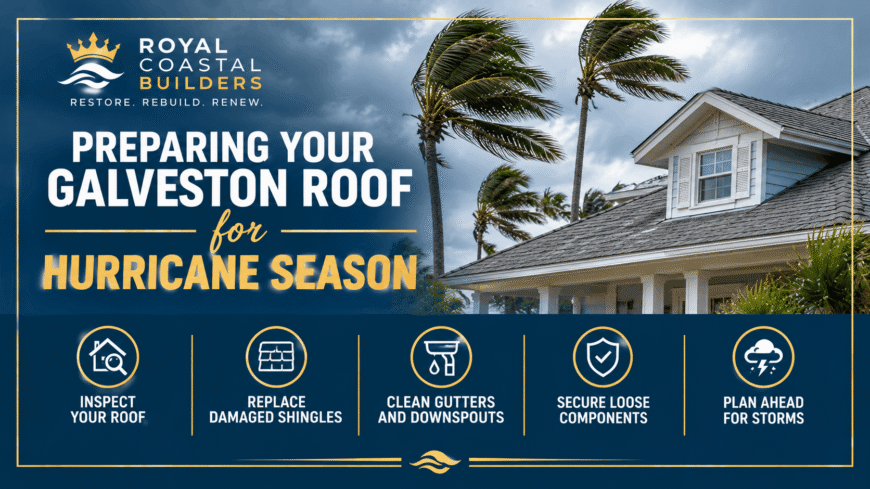
Your Pre-Season Roof Checklist
Walk the property and look at the roof from the ground with binoculars. Do not climb onto a roof you have not been trained to work on, and never go up when it is wet. Look for:
- Shingles: Missing, cracked, curling, or lifted shingles, especially along edges, ridges, and corners where wind uplift starts.
- Flashing: Loose, bent, or rusted metal around chimneys, vents, skylights, and wall transitions.
- Sealants: Dried or cracked sealant around roof penetrations and vent pipes.
- Metal roofing: Loose panels, backed-out fasteners, or rust at seams and screw heads.
- Gutters and downspouts: Clogs, sagging sections, or loose connections that can send water back toward the roof edge.
- Soffits and eaves: Gaps or damage that let wind and wind-driven rain get under the roof.
- Trees and debris: Overhanging limbs and loose items that can become projectiles.
Then check the attic on a dry day. Look for daylight coming through the roof deck, water stains, damp or compressed insulation, and a musty smell. These are signs that moisture has already found a way in. Our guide to roof damage warning signs covers what to look for in more detail.
Schedule a Professional Inspection Before the Season
A ground-level look is a good start, but a professional inspection catches problems that binoculars cannot, such as soft decking, failing fasteners, and hidden flashing damage. The off-season is the ideal time to book one. Contractors are less busy, repairs can be scheduled on your timeline, and materials are easier to get than during a storm rush.
It also helps to take dated photos of your roof and attic while everything is in good condition. If a claim is ever needed, those photos show what the roof looked like before a storm. Our roofing team can inspect your roof and recommend what should be repaired before the next season.
When You Need Emergency Roof Repair in Galveston
Not every roof problem is an emergency, but some cannot wait. Call for emergency roof repair in Galveston if you notice:
- Active leaks or water dripping through the ceiling
- Missing shingles or roofing sections that expose the deck
- A tree or large debris on the roof
- Lifted or torn ridge caps or metal panels
- Sagging areas in the roof or ceiling
Emergency repair is usually a temporary measure. It typically includes tarping or sealing exposed areas, boarding up openings, and stopping active water entry so the home is protected until permanent repairs can be scheduled. Tarps need to be properly secured to handle Gulf winds. Lightweight consumer tarps often fail in the next gust.
What to Do Right After Roof Damage
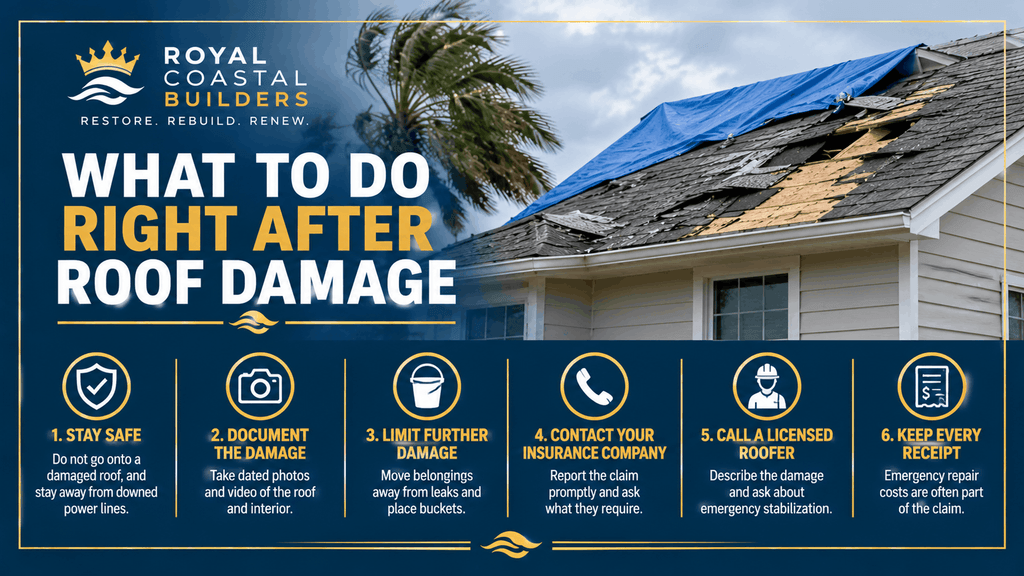
If your roof is damaged in a storm, take these steps in order once it is safe:
- Stay safe. Do not go onto a damaged roof, and stay away from downed power lines or sagging ceilings.
- Document the damage. Take dated photos and video of the roof, ceilings, and any water intrusion before cleanup.
- Limit further damage. Move belongings away from leaks and place buckets, if it is safe to do so.
- Contact your insurance company. Report the claim promptly and ask what they require for temporary repairs.
- Call a licensed roofer. Describe the damage and ask about emergency stabilization.
- Keep every receipt. Emergency repair costs are often part of the claim.
Our post-storm restoration guide walks through the broader recovery process, including insurance and system inspections.
Choosing a Contractor After a Storm
After a major storm, out-of-area crews often arrive looking for work. Before hiring anyone for emergency roof repair, check that the company is licensed and insured, has a local address and a track record in your community, and provides a written scope of work. Be cautious about pressure to sign contracts on the spot, and read anything you sign before agreeing to it. Royal Coastal Builders is a local, licensed and insured company that handles emergency services for roofing and storm damage.
Upgrades That Make Your Roof Harder to Damage
If your inspection shows an aging roof, preparation might mean replacing rather than patching. Options such as wind-rated shingles, stronger underlayment, and improved roof-to-wall connections can significantly improve how a roof performs in a storm. Our guides on wind-rated shingle roof replacement and metal roofing for coastal homes explain these choices.
For official preparedness guidance, the National Hurricane Center and Ready.gov offer storm tracking and family readiness checklists.
Be Ready Before the Next Storm
A little preparation goes a long way on the Gulf Coast. Inspect your roof, fix small problems early, and know who you will call if damage happens. When you need emergency roof repair in Galveston, having a trusted contractor already identified saves valuable time.
Want your roof checked before the next storm? Contact Royal Coastal Builders at (409) 996-2273 or visit royalcoastalbuilders.com/contact to schedule an inspection or discuss emergency roof repair.