How to Build a Storm-Resistant Home on the Coast
Building a home on the coast means preparing for nature’s worst. For every dollar spent on storm mitigation, homeowners save $6 in future damage costs, according to the National Institute of Building Sciences. With hurricanes causing over $1.5 trillion in damages since 1980 and 32.7 million homes currently at risk, building a storm resistant home coastal property requires more than standard construction.
Whether you’re planning a new build or upgrading an existing property, this guide covers the essential steps to create a home that stands strong against hurricanes, flooding, and coastal weather. At Royal Coastal Builders, we’ve spent over 50 years building homes on Galveston Island that weather Gulf Coast storms with minimal damage.
Why Storm-Resistant Construction Matters
The numbers tell a sobering story. In 2024 alone, Hurricane Helene caused $78.7 billion in damages, while Hurricane Milton added another $34 billion. Homes with FORTIFIED roofs had 35% fewer insurance claims and 23% less severe damage after recent hurricanes, proving that proper construction saves money and lives.
Beyond financial protection, storm-resistant construction offers peace of mind. When evacuation orders come, you’ll know your home has the best chance of survival. When you return, you’ll face repairs instead of rebuilding.
Understanding Coastal Building Requirements
Coastal construction codes exist for good reason. Areas prone to hurricanes must meet stricter standards than inland regions.
Wind Speed Requirements:
Most coastal zones require homes to withstand 130-180 mph sustained winds depending on location. Florida’s High Velocity Hurricane Zones demand the highest resistance at 170-180 mph. Your custom home builder should know the exact requirements for your area.
Flood Zone Compliance:
The FEMA flood maps divide coastal areas into zones. High-risk zones (V and A zones) require elevated construction. Your lowest habitable floor must sit above the Base Flood Elevation (BFE), typically 8-18 feet depending on location.
Building Codes:
Coastal areas follow enhanced versions of the International Building Code. These codes specify everything from fastener types to roof attachment methods. Working with experienced coastal builders ensures compliance.
Foundation Systems for Coastal Homes
Your foundation determines whether your home survives storm surge. Traditional slab foundations don’t work in flood-prone coastal areas.
Pile and Beam Foundations:
This is the gold standard for coastal construction. Steel or concrete pilings driven 15-30 feet into the ground support the home above flood levels. Storm surge flows underneath instead of through your home.
Pile foundations cost $45,000-$85,000 but provide unmatched protection. They’re required in velocity zones where waves can reach the building.
Elevated Stem Walls:
In lower-risk flood zones, homes can use elevated stem walls on engineered fill. The fill raises the building pad, then stem walls support the structure. This method costs less ($35,000-$60,000) but offers lower flood protection.
Key Foundation Features:
- Proper elevation above BFE (add 1-2 feet extra for better insurance rates)
- Hurricane straps connecting foundation to structure
- Breakaway walls below elevation for parking or storage
- Proper drainage around the foundation
Royal Coastal Builders specializes in coastal foundation systems designed for maximum storm protection.
Storm-Resistant Materials That Last
Salt air, high winds, and flooding destroy standard building materials. Coastal homes need specialized products.
Exterior Materials:
Fiber cement siding outperforms all alternatives in coastal environments. It won’t rot, corrode, or warp from salt exposure. While more expensive upfront, it lasts 50+ years with minimal maintenance.
Masonry construction (concrete block or brick) provides excellent durability. Proper waterproofing is critical to prevent moisture infiltration.
Roofing Options:
Metal roofing is ideal for coastal homes. Aluminum or galvanized steel withstands salt air and high winds. When properly installed with hurricane clips, metal roofs resist 150+ mph winds and last 40-50 years.
Class 4 impact-resistant shingles offer an alternative if metal doesn’t fit your aesthetic. These shingles withstand hail and flying debris better than standard products.
Avoid standard asphalt shingles. They deteriorate quickly in salt air and blow off in moderate winds.
Windows and Doors:
Impact-resistant windows and doors are non-negotiable. Large missile impact-rated products withstand debris hitting at 50 mph. They maintain structural integrity even when cracked.
Budget $15,000-$35,000 for impact windows and doors depending on home size. The investment pays for itself through lower insurance premiums and storm protection.
Fasteners and Hardware:
Every fastener exposed to weather must be stainless steel or hot-dipped galvanized. Standard fasteners rust through in months, compromising structural connections.
Use marine-grade electrical fixtures, stainless steel door hardware, and corrosion-resistant plumbing components throughout.
Structural Design for Wind Resistance
How you build matters as much as what you build with. Proper structural design disperses wind forces throughout the home.
Continuous Load Path:
Every component must connect to the next, creating a continuous path from roof to foundation. Hurricane straps, metal connectors, and proper fastening ensure wind forces transfer through the structure instead of tearing it apart.
Roof Attachment:
Standard “toe-nailing” roof trusses is inadequate for coastal construction. Use hurricane straps or clips at every rafter-to-wall connection. This prevents roof uplift, the leading cause of catastrophic hurricane damage.
Roof Shape:
Hip roofs (four-sided) perform better than gable roofs in high winds. The aerodynamic shape reduces uplift forces. If using gable ends, they must be properly braced.
Round or multi-sided homes offer even better wind resistance by allowing air to flow around the structure, but most homeowners prefer traditional shapes.
Garage Doors:
Garage doors are weak points during storms. Standard garage doors fail in sustained winds above 90 mph, allowing wind into the home and increasing pressure on walls and roof.
Wind-rated garage doors cost $3,000-$6,000 but prevent cascading failures. Consider eliminating the garage door entirely with a carport design below the elevated home.
Flood Protection Strategies
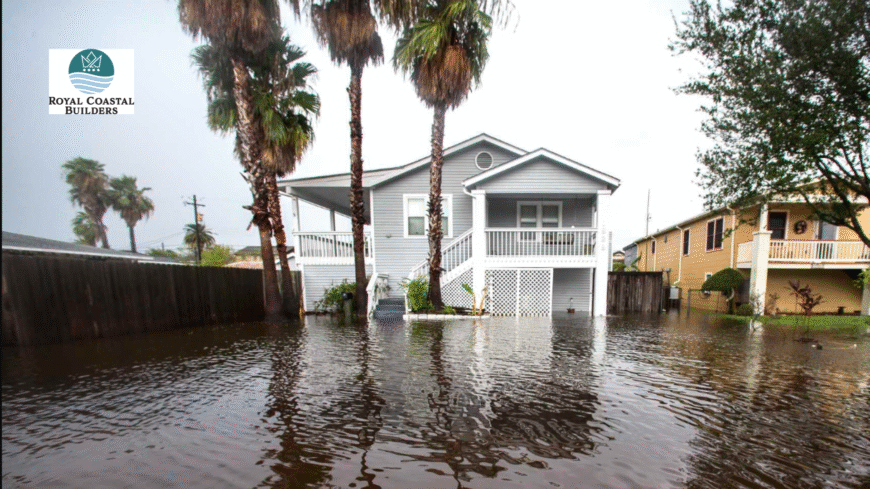
Wind gets attention, but flooding causes extensive damage. Multiple strategies reduce flood risk.
Proper Elevation:
Every foot above BFE reduces flood risk exponentially. Building 2-3 feet above minimum requirements dramatically lowers insurance costs and damage probability.
Breakaway Walls:
If using enclosed space below the home (for parking or storage), breakaway walls are required. These walls collapse under wave pressure, allowing water to flow through rather than pushing the entire structure over.
Flood Vents:
Enclosed areas below BFE need flood vents allowing water to enter and exit freely. This equalizes pressure and prevents structural failure. One square inch of vent per square foot of enclosed area is required.
Sealed Construction:
Use water-resistant materials below flood elevation. Concrete or marine-grade pressure-treated lumber works well. Never use standard wood framing or drywall in areas that might flood.
Drainage Systems:
Site grading must direct water away from the home. French drains, proper gutters, and downspout extensions prevent water accumulation during heavy rain.
Energy Efficiency in Storm-Resistant Homes
Storm protection and energy efficiency work together. Tight, well-insulated homes resist both storms and energy waste.
Insulation:
Spray foam insulation creates an airtight envelope while providing structural reinforcement. It resists water intrusion better than fiberglass and doesn’t grow mold.
Insulated concrete forms (ICFs) combine structural strength with excellent insulation. These reinforced concrete walls can withstand Category 5 hurricanes while reducing energy costs by 60%.
Impact Windows:
Impact-resistant windows with Low-E coatings block heat while providing storm protection. They reduce cooling costs significantly in hot coastal climates.
HVAC Systems:
High-efficiency systems (16+ SEER) paired with proper insulation keep coastal homes comfortable affordably. Include whole-house dehumidification to control moisture.
Solar Panels:
Solar systems can work on coastal homes with proper wind-rated mounting. Include battery backup for power during outages. Design systems to disconnect in extreme winds for safety.
Insurance Considerations for Coastal Homes
Your construction choices directly affect insurance costs and availability.
Wind Mitigation Credits:
Installing storm-resistant features reduces wind insurance premiums by 20-45%. Document everything:
- Hurricane straps and clips (10-20% discount)
- Impact windows (10-15% discount)
- Reinforced roof deck (5-10% discount)
- Secondary water resistance (5-10% discount)
Flood Insurance:
Separate flood insurance is required in high-risk zones. Only 6% of U.S. homeowners carry flood insurance, leaving most vulnerable to catastrophic loss.
Elevation dramatically affects rates. Building 2 feet above BFE can save $30,000+ over a 30-year mortgage compared to building at minimum elevation.
Continuous Coverage:
Maintain continuous coverage without lapses. Insurance companies view coverage gaps as red flags, making it harder and more expensive to get new policies.
Working with Experienced Coastal Builders
The most important decision is choosing the right builder. Coastal construction demands specialized knowledge standard contractors don’t have.
What to Look For:
- Minimum 10 years building exclusively in coastal areas
- Portfolio of completed projects that survived recent storms
- Understanding of local building codes and permitting
- Relationships with structural engineers
- Proper licensing and comprehensive insurance
Red Flags:
- Primarily works inland but claims coastal experience
- Can’t provide recent local references
- Unusually low bids compared to other qualified builders
- Vague about storm performance of past projects
The Royal Coastal Builders Advantage:
With over 50 years of combined experience on Galveston Island, we’ve built hundreds of homes that have weathered multiple hurricanes. Our complete service includes custom homes, remodeling, roofing, and storm repairs.
We handle every aspect from land selection through final inspection, ensuring your home meets or exceeds all coastal construction standards.
Timeline and Budget Expectations
Coastal construction takes longer and costs more than standard building. Plan accordingly.
Realistic Timeline:
- Design and permitting: 3-6 months
- Construction: 10-14 months
- Total: 13-20 months for most projects
Hurricane season (June-November) can extend timelines. Smart builders plan to achieve weatherproofing before peak storm months.
Cost Breakdown:
Coastal construction costs 20-35% more than comparable mainland building. Current rates on Galveston Island:
- Basic coastal construction: $220-$275 per sq ft
- Mid-range custom: $275-$375 per sq ft
- High-end: $375-$550+ per sq ft
A typical 2,500 sq ft home costs $750,000-$950,000 including foundation, impact protection, site work, and permits.
Coastal-Specific Costs:
- Elevated foundation: $45,000-$85,000
- Impact windows/doors: $15,000-$35,000
- Hurricane-rated garage door: $3,000-$6,000
- Enhanced structural connections: $8,000-$15,000
These aren’t optional extras but essential components of proper coastal construction.
Maintenance for Long-Term Storm Protection
Storm-resistant homes need regular maintenance to maintain protection.
Annual Inspections:
Check these items yearly:
- Roof for loose fasteners or damage
- Hurricane straps and structural connections
- Sealants around windows and doors
- Foundation pilings or pads
- Drainage systems and gutters
After Every Storm:
Even minor tropical storms can cause hidden damage. Inspect carefully after any significant weather event. Address minor issues before they become major problems.
Material-Specific Care:
- Rinse metal components with fresh water to remove salt
- Repaint exposed wood surfaces every 3-5 years
- Replace sealants around openings every 5-7 years
- Clean and lubricate impact window/door mechanisms
Royal Coastal Builders provides comprehensive maintenance services to keep your home storm-ready.
Future-Proofing Your Coastal Home
Climate patterns suggest more intense hurricanes ahead. Build with the future in mind.
Exceed Minimum Standards:
Building codes represent minimum acceptable construction. Where possible, exceed requirements:
- Design for wind speeds 10-20 mph above code minimums
- Elevate 2-3 feet above required BFE
- Use structural connections rated for higher loads
- Install backup power systems
Adaptable Design:
Design homes that can be upgraded as codes change. Roof structures strong enough for future solar panels. Electrical systems sized for eventual electric vehicles. Foundations that could support additions.
Smart Home Integration:
Remote monitoring systems alert you to problems. Automatic shutters deploy before storms. Sensors detect water intrusion early. These systems provide security and early warning.
Conclusion
Building a storm resistant home on the coast requires careful planning, quality materials, and experienced builders. While coastal construction costs more upfront, proper building techniques dramatically reduce storm damage, lower insurance costs, and protect your investment.
The key takeaways:
- Proper elevation above flood levels is non-negotiable
- Impact-resistant materials throughout save money long-term
- Continuous load paths distribute wind forces safely
- Working with experienced coastal builders ensures compliance
- Every dollar spent on mitigation saves six dollars in future damage
Don’t trust your coastal home to general contractors. Choose builders who specialize in storm-resistant construction and understand the unique challenges of building near the water.
Ready to start your coastal building project? Contact Royal Coastal Builders today. We’ll discuss your vision, evaluate your site, and create a home that stands strong for generations. With our proven track record on Galveston Island and the Texas Gulf Coast, we bring the expertise your storm resistant home coastal property demands.
Frequently Asked Questions
Can any home be completely hurricane-proof?
No home is completely hurricane-proof, but proper construction makes homes hurricane-resistant to withstand Category 4-5 storms with minimal damage.
How much does storm-resistant construction add to building costs?
Expect 20-35% higher costs than comparable inland construction, primarily from elevated foundations ($45,000-$85,000) and impact-resistant openings ($15,000-$35,000).
Do I need a special builder for coastal construction?
Yes. Coastal construction requires specific knowledge of elevation requirements, wind resistance, corrosion-resistant materials, and local codes that general contractors typically lack.
What’s the most important storm-resistant feature?
Proper elevation above flood levels prevents the most common and expensive damage. Combined with continuous structural connections, elevation provides maximum protection.
How long do coastal homes last?
With proper materials and maintenance, coastal homes last 75-100+ years. The key is using corrosion-resistant components throughout and staying current with maintenance.
About Royal Coastal Builders
Royal Coastal Builders designs and builds custom homes on Galveston Island and across the Texas Gulf Coast. With over 50 years of combined experience, we create durable, storm-resistant homes tailored to coastal conditions. We also offer remodeling, roofing, plumbing, and storm repair services.
Start your coastal project: Royal Coastal Builders