
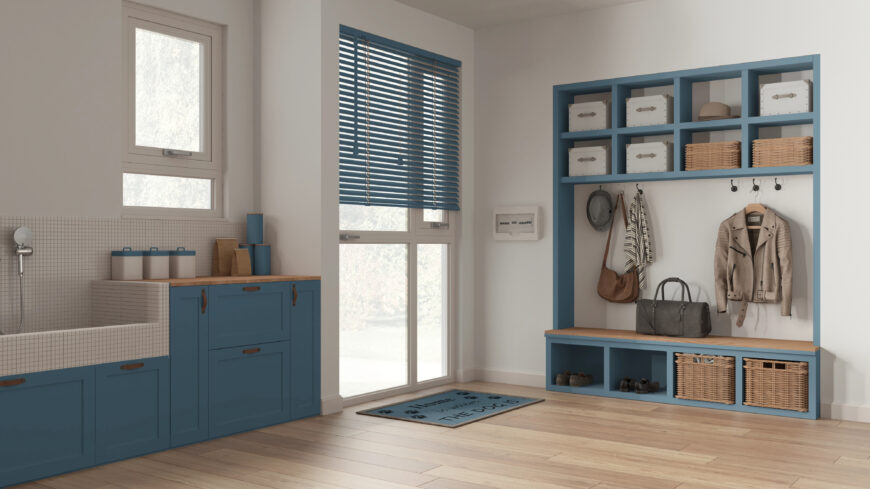
Creating a “Sand Room”: The Coastal Evolution of the Traditional Mudroom
Traditional mudrooms handle dirt and boots. Beach house mudrooms face a completely different challenge. Sand infiltrates everywhere, clinging to wet feet, hiding in towels, and embedding in swimsuits. The evolution from mudroom to “sand room” reflects the unique demands of coastal living where the battle isn’t against mud but against endless grains of beach that threaten to colonize your entire home.
At Royal Coastal Builders, our 50+ years building Galveston Island homes have taught us that effective beach house mudroom ideas require rethinking traditional layouts. This specialized space becomes the most important room in your beach house, determining whether you relax on weekends or constantly sweep sand.
Why Beach Houses Need Dedicated Sand Rooms
The traditional mudroom concept doesn’t translate directly to coastal environments. Understanding the difference shapes effective design.
Sand vs. Mud Challenges:
Mud stays on shoes and dries into clumps that sweep easily. Sand sticks to wet skin, hides in fabric, and scatters with every step. A single beach trip can introduce thousands of sand particles that spread throughout your home if not intercepted at entry.
Wet swimsuits drip saltwater for hours. Beach towels stay damp and develop mildew without proper drying. Sunscreen-covered skin transfers oily residue to every surface touched. These coastal-specific challenges demand purpose-built solutions.
Location and Flow:
Position sand rooms directly between outdoor access and main living spaces. The ideal placement creates a barrier preventing beach debris from reaching interior rooms. Ground-level locations work perfectly under elevated beach houses, serving as transition zones.
Multiple access points help high-traffic beach houses. Separate entries from driveway parking and beach access prevent bottlenecks when the whole family returns from swimming.
Essential Features for Effective Sand Rooms
Certain elements make the difference between functional sand rooms and spaces that fail their purpose.
Outdoor Shower or Rinse Station:
This non-negotiable feature stops sand before it enters the house. Position showers immediately outside or just inside the sand room. Hot and cold water capability allows comfortable rinsing even on cool days.
Outdoor showers reduce indoor sand by up to 90% according to coastal home studies. Family members rinse feet, legs, and hands before entering, leaving sand outside rather than tracking it through the house.
Include multiple shower heads accommodating several people simultaneously. This prevents lines forming when everyone returns from the beach at once.
Our custom home building services incorporate proper outdoor shower placement with appropriate drainage and plumbing.
Waterproof Storage:
Standard wood cabinets rot quickly in damp sand room conditions. Marine-grade HDPE cabinets, powder-coated metal lockers, or sealed composite materials resist moisture and salt air indefinitely.
Open cubbies with removable bins work better than closed cabinets. They provide visibility, improve air circulation, and allow easy cleaning. Assign each family member a dedicated cubby preventing “whose stuff is this” confusion.
Wire baskets drain water while containing beach toys, goggles, and snorkel gear. Solid baskets work for dry items like sunscreen and beach games.
Dedicated Drying Areas:
Wet swimsuits and towels need drying space away from finished walls. Install corrosion-resistant hooks, rods, or wall-mounted drying racks in open areas with good airflow.
Position drying areas near windows or exterior walls maximizing natural ventilation. Ceiling fans accelerate drying while preventing mildew development. Some homeowners install small dehumidifiers in enclosed sand rooms controlling moisture.
Flooring That Handles Wet Sand
Sand room floors take tremendous abuse requiring specially selected materials.
Ideal Flooring Choices:
Large-format porcelain tile handles water, salt, and sand without damage. Choose textured surfaces preventing slipping on wet floors. Darker colors hide sand better than white tile where every grain shows.
Sealed concrete provides durable, cost-effective flooring. Add non-slip sealers for safety. The hard surface allows easy sweeping and hosing.
Drainage Considerations:
Sloped floors directing water toward drains prevent puddles and standing water. Install trench drains near shower areas capturing rinse water before it spreads. Standard floor drains work for general drainage.
Proper drainage makes maintenance simpler. Hose down the entire sand room periodically, and water flows to drains rather than pooling.
Smart Storage Solutions
Organization systems keep beach gear accessible while preventing clutter.
Individual Locker Systems:
Assign each person a locker with shelf, hooks, and floor space for shoes. This personal storage prevents mixing and creates accountability. Kids learn to manage their own beach equipment.
Label lockers with names or decorative tags. This small touch reduces arguments and helps guests find their designated spaces.
Specialized Storage:
Vertical surfboard and paddleboard racks save floor space. Wall-mounted bicycle hooks handle beach cruisers. Fishing rod holders keep rods organized and protected.
Create designated spaces for beach chairs, umbrellas, and coolers. Vertical storage maximizes limited square footage in compact sand rooms.
Seating with Storage:
Built-in benches with hinged lids provide seating for putting on shoes while hiding seasonal items. Waterproof cushions on benches add comfort without absorbing moisture or developing mildew.
Choose marine-grade foam cushions with quick-dry covers. These materials handle constant moisture without degrading.
Color and Material Choices
Smart selections enhance functionality while creating pleasant spaces.
Coastal Color Palettes:
Light blues, seafoam greens, and sandy neutrals create beachy vibes without feeling themed. White walls reflect light making small sand rooms feel larger. Navy accents add depth without showing dirt like pure white surfaces.
Avoid dark colors on floors where sand shows prominently. Medium tones hide dirt while maintaining coastal aesthetics.
Durable Materials:
Shiplap or beadboard walls resist moisture better than drywall. These materials also handle impact from beach toys and equipment better than standard walls.
Marine-grade hardware resists corrosion. Stainless steel hooks, towel bars, and cabinet pulls maintain appearance despite constant salt air exposure.
Our bathroom remodeling expertise translates well to sand room design, as both spaces handle similar moisture challenges.
Lighting and Ventilation
Proper air movement and lighting make sand rooms functional and pleasant.
Natural Light:
Windows provide natural light while supporting ventilation. Position windows to maximize cross-breezes. Operable windows allow quick drying after rinsing activities.
Skylights brighten interior sand rooms lacking exterior walls. Natural light makes spaces more inviting and helps identify what needs cleaning.
Artificial Lighting:
LED fixtures rated for damp locations resist moisture damage. Bright overhead lighting ensures visibility for finding items in cubbies and storage.
Motion-sensor lighting adds convenience when hands are full of beach gear.
Ventilation Systems:
Exhaust fans remove humid air preventing mildew growth. Continuous ventilation is essential in enclosed sand rooms without natural airflow.
Position fans to exhaust air outdoors rather than into other home areas. This prevents humid, salty air from affecting living spaces.
Multi-Purpose Design
Many sand rooms serve multiple functions maximizing utility.
Combined Laundry:
Washing beach towels and swimsuits immediately prevents mildew and sand distribution. Installing washers in sand rooms creates efficient workflows. Wash, dry, and store beach linens all in one location.
Front-loading washers fit under counters providing folding surfaces. Include laundry sinks for pre-treating heavily soiled items.
Pet Washing Stations:
If the sand room includes a shower, it easily accommodates pet washing. Dogs love the beach but need rinsing before entering the house. Dedicated pet stations prevent bathroom messes.
Maintenance Strategies
Regular care keeps sand rooms functional rather than overwhelming.
Daily Tasks:
Sweep or vacuum sand accumulation. This 5-minute daily task prevents buildup that becomes difficult to remove. Addressing sand immediately when fresh is far easier than dealing with ground-in particles.
Rinse drying areas removing salt deposits that accelerate corrosion. Quick freshwater spray prevents damage to hooks and hardware.
Weekly Cleaning:
Mop floors thoroughly removing salt residue. Clean storage bins and cubbies. Check drains ensuring they flow freely without clogs from sand and debris.
Rotate beach towels to laundry preventing mildew development. Inspect equipment for needed repairs or replacements.
Conclusion
Beach house mudroom ideas must evolve beyond traditional concepts to create effective sand rooms. The specialized space requires outdoor showers stopping sand at entry, waterproof storage handling wet equipment, durable flooring surviving constant moisture, proper drainage preventing water accumulation, and dedicated drying areas for swimsuits and towels.
The sand room serves as critical transition space between beach activities and clean interiors. Well-designed sand rooms reduce interior cleaning time by 70% by containing mess at entry points. This functional space determines whether beach house ownership feels relaxing or exhausting.
Investment in proper sand room design pays dividends through easier maintenance, better preserved interiors, and more time enjoying the beach rather than cleaning up afterward. The space doesn’t need to be large but must incorporate essential features working together as a system.
Ready to design the perfect sand room for your beach house? Contact Royal Coastal Builders today. Our 50+ years on Galveston Island give us extensive experience creating sand rooms that actually work. We’ll help you incorporate beach house mudroom ideas that transform this critical space from afterthought to your home’s hardest-working room.
Frequently Asked Questions
What’s the difference between a mudroom and a sand room?
Mudrooms handle dirt and boots that stay on shoes. Sand rooms must manage wet skin, dripping swimsuits, sandy towels, and fine particles that spread easily. Sand rooms require outdoor showers, waterproof storage, and better drainage.
How big should a beach house sand room be?
Minimum 60-80 square feet for basic functionality. Larger families or homes with frequent guests benefit from 100-150 square feet allowing multiple people to change simultaneously.
Do I really need an outdoor shower?
Yes. Outdoor showers are essential for beach houses, reducing interior sand by up to 90%. They prevent the majority of beach debris from entering your home.
What flooring works best in sand rooms?
Porcelain tile or sealed concrete performs best. Both handle water, resist staining, and allow easy cleaning. Avoid carpet, wood, or materials that trap sand.
Can a sand room also be a laundry room?
Absolutely. Combining functions makes sense since beach towels and swimsuits need immediate washing. Install front-loading washers under counters for efficient use of space.
How do I prevent mildew in damp sand rooms?
Ensure proper ventilation through windows, exhaust fans, or both. Use quick-dry materials for cushions and storage. Don’t allow wet items to sit in closed cabinets.
About Royal Coastal Builders
Royal Coastal Builders designs and builds custom homes on Galveston Island and across the Texas Gulf Coast. With over 50 years of combined experience, we create functional sand rooms that make beach house living easier. We also offer kitchen remodeling, bathroom remodeling, and comprehensive construction services.
Design your perfect sand room: Contact us today